St Gregory the Great,

Pope Gregory the Great
Pope St Gregory the Great.

Today is the feast of St Gregory the Great. He was born in Rome around the year 540AD into a wealthy Roman family. Most of their wealth came from land they held in Sicily. Although we know little of his early life, what we do know it was a time a turmoil. If Rome wasn’t at war then warfare was not far away.

Around the year 575 his father died and Gregory became a monk. Whether he followed the rule of St Benedict is hotly debated. He turned his family villa into a monastry. His manner of life was so renwoned that it drew the attention of Pope Pelagius II who around 585 sent him on a diplomatic mission to Constantinople. This Gregory did not like!. The nature of the mission need not detain us, but it ended in failure.

In 590 Pope Pelagius died and Gregory became Pope by popular acclamation. He was reluctant to accept, but saw it as God’s will. Once again it was a time of uncertainty, as warfare and violence were never far from Rome and its environs. His reign was fruitful in many ways

  • He was a missionary Pope. For example he sent one of the monks of his own monastry, St Augustine to England.
  • He made  some reforms of the Liturgy, eg moving the Our Father to its present place in the Mass, shortening the penitential rite. There is some evidence to suggest he introduced what is called Gregorian chant
  • He made sure the poor were fed and looked after. For example in the mid 590’s there was famine in Rome. He insisted that all the produce of the land owned by the church be brought to Rome to feed the starving. It was the clergy who organised it. It has also been said that this almost bankrupted the church in Rome!
  • He was also a great write. His Pastoral Rule on how Bishops and priests should live had an enormous influence on the Church.

He died in the year 604 and was immdiatly proclaimed a saint.
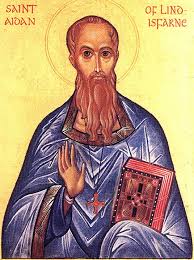
St Aidan of Lindisfarne

St Aidan
St Aidan

Today,  August 31st marks the feast of St Aiden. We know next to nothing about his early life apart from the fact he was from Ireland and was associated with the monks of Iona. We know from the writings of St Bede that he was a Bishop. Some scholars have suggested he may have been Bishop of Clogher in Ireland. What we do know is that about the year 630AD he moved to Lindisfarne and founded a monastry there. His reputation soon spread and he attracted followers and disciples. St Bede suggests that any money he received he have to the poor and to free slaves. Some of the latter became monks in his community.

In 635 he became Bishop of Lindisfarne. The local king, Oswald, was a new convert to Christianity and persuasded Aiden to go around and bring the faith to what in now Northhumberland. Again St Bede tells us that he was offered a horse, as befitted his dignity as a bishop. This he refused and went around on foot, winning many to the faith by his gentle preaching and manner. He died in 650 at Bamborough.

St Aiden pray for us.

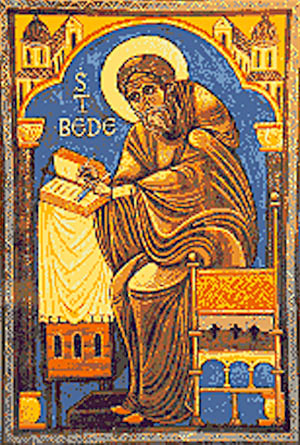
St Bede of Jarrow

St Bede
St Bede

Today markes the feast of St Bede you can find a brief biography here .

In many respects he was a remarkable man. His most famous work is his History of Britain. It’s importance and influence cannot be overstated, with out it we would know vitrually nothing about the early history of our island. What is often over looked is his interest in Chronology  – he is mainly responsible for the term Anno Domini or more to the point the year 2019 is based on his work.

He was also a man of faith and this is clearly shown in all his works. He used his talents for the edification of others and for the benefit of the church

Saint Matthias

St Matthias
St Matthias

The 14th of May marks the feast of St Matthias. The Acts of the Apostles tell us how he was chosen to replace Judas Iscariot.

“We must therefore choose someone who has been with us the whole time that the Lord Jesus was travelling around with us…… and he can act with us as witness to his resurrection.”

“Having nominated two candidates Joseph known as Barsabbas and Matthias….. They then few lots for them, and the lot fell on Matthias, he was listed as one of the twelve apostles. ”

That is all we really know about him. There are many legends surrounding his life, none of which can be verified with any certainty. I find our lack of knowledge of him rather reassuring, I am reminded by the countless Bishops, priests and lay men and women who have laboured hard, produced much fruit and their work is either unknown or largely forgotten, except by Almighty God of course.

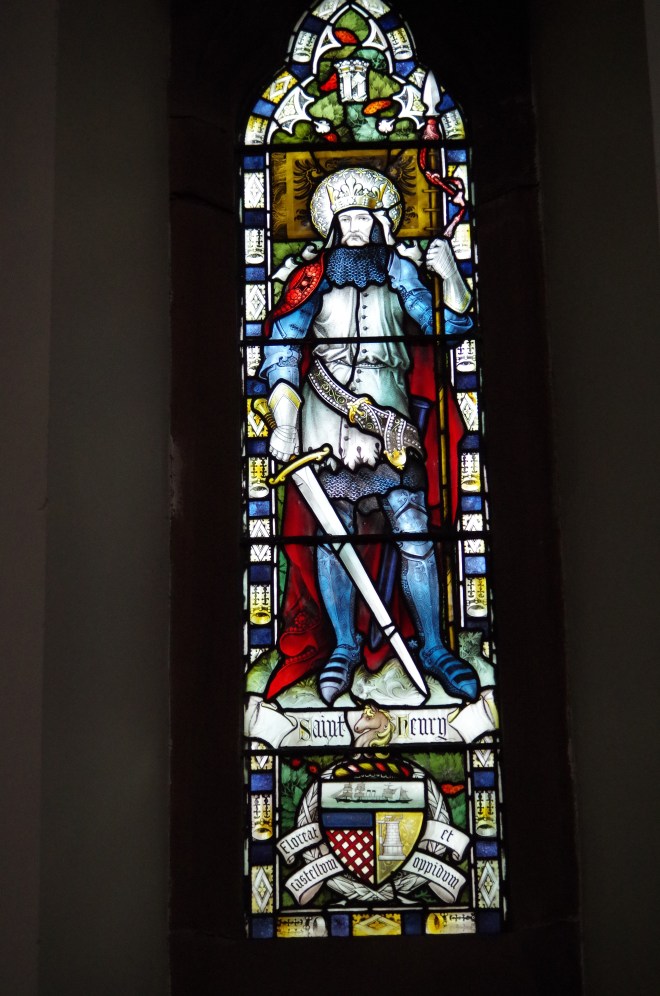
St Henry king of Germany

St Henry
St Henry in Our Lady& St Michael’s church.

Today is the optional feast of St Henry. His biography can be found here

The window was actually erected and donated in memory of Henry McAleer, the first Catholic mayor of Workington. Henry was an Irish immigrant to Workington, but, unlike many of his fellow countrymen, he was a businessman. He was a boot and shoe maker. He was elected mayor but sadly died in office in 1906. The window was donated by Workington Town council in his memory. The coat of arms at the bottom of the window is that of Workington.

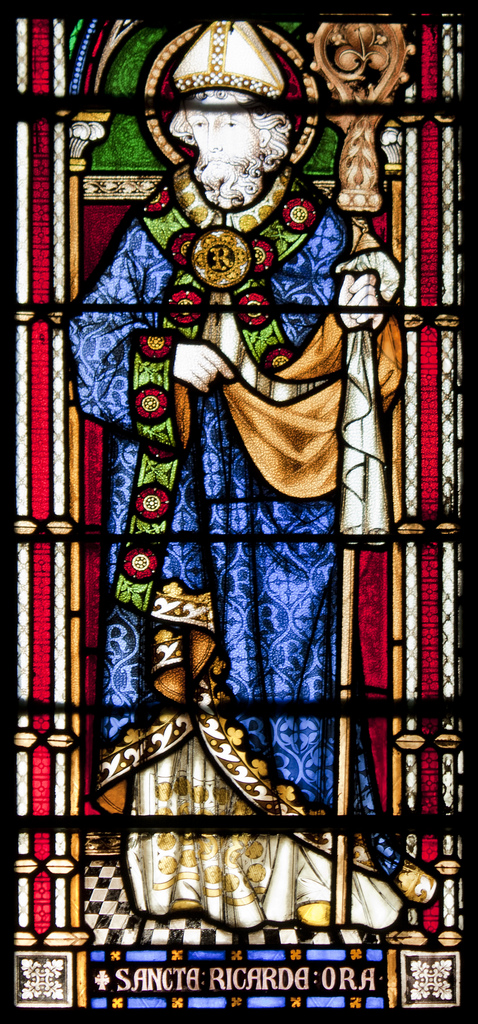
St Richard of Chichester

St Richard of Chichester

Today we keep the optional feast of St Richard of Chichester. If you want a decent summary of his life you will find it Here.

Today’s feast reminds us that we have a wealth of English, Scottish and Welsh saints, many of whom have been forgotten or overlooked. There are historical reasons for that, but I will not dwell on those here, but I feel that they need to be celebrated and remembered.

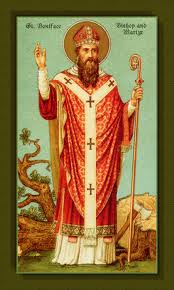
St Boniface

St Boniface
St Boniface

Today, being June 5th we celebrate the feast of St Boniface, I am not going to gave a detailed biography of him as this can easily be found elsewhere like here

He was born is Crediton in Devon, his original name being Wynfrith. Much of his work and ministry was in what is now Germany. He was martyred and is buried and honoured in Fulda in Germany. Indeed he is one of the patron saints of that country.

His feast should remind us that in the 7th and 8th centuries England was a  spiritual powerhouse, we provided many scholars and missionaries to continental Europe. Indeed one cannot fully understand the growth of the faith without appreciating the contribution and role of so many from England. How times have changed!